
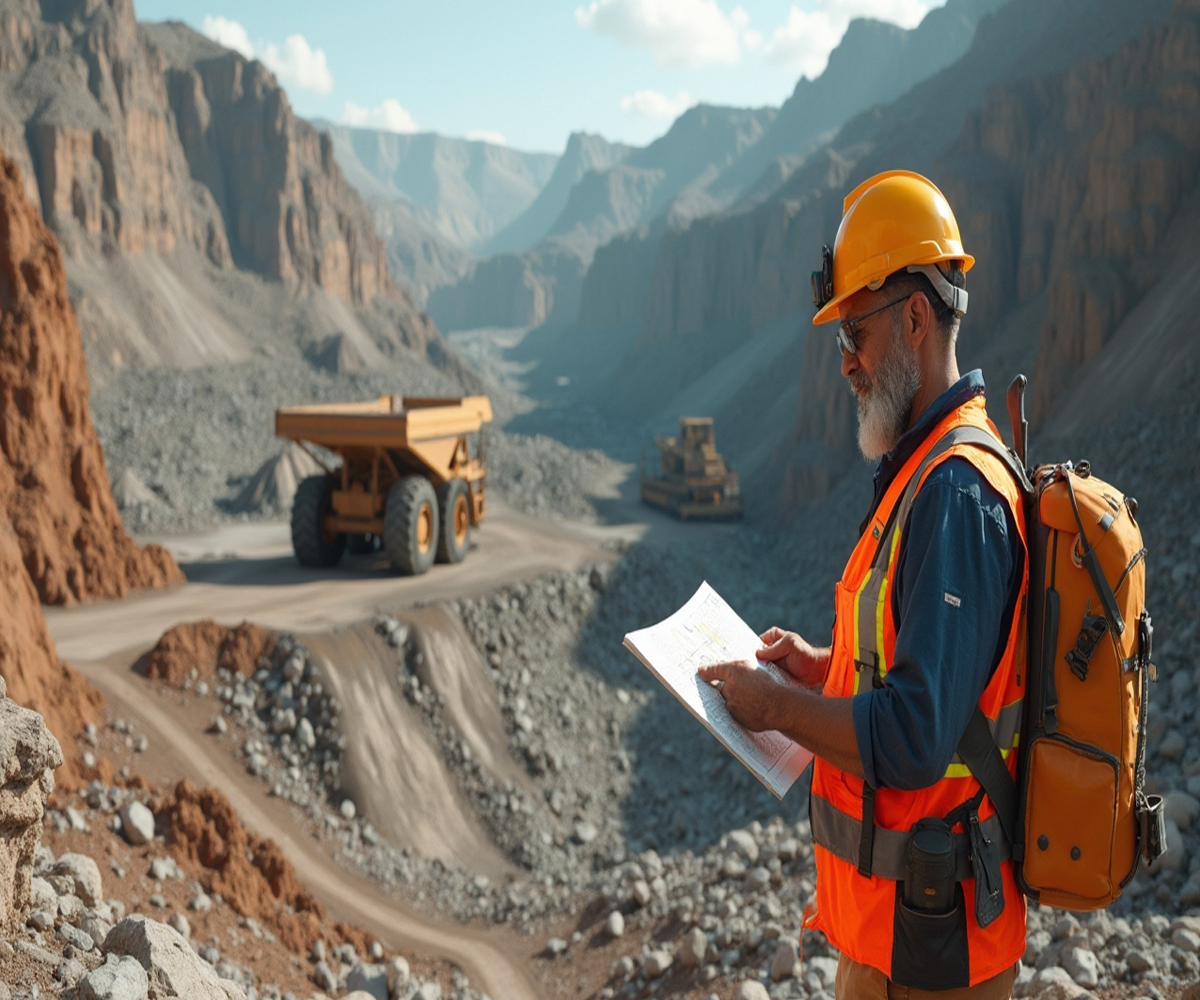
Mining is one of the most important industries that supports infrastructure development, construction, manufacturing, and energy production. Minerals such as iron ore, limestone, granite, coal, and other natural resources are essential for various industries and economic growth. However, before any mining activity begins, it is crucial to understand the geological characteristics of the land where minerals are located. This is where geological surveys play a vital role.
A geological survey is a scientific study conducted to examine the composition, structure, and mineral potential of the earth’s surface and underground layers. These surveys help identify the presence of mineral deposits, determine their quality and quantity, and assess whether mining operations in a particular area will be economically viable. Without proper geological surveys, mining companies may face significant risks, including financial losses, operational challenges, and environmental issues.
Identifying Mineral Deposits and Resource Potential
One of the primary purposes of a geological survey is to identify the presence of mineral deposits in a specific area. Geologists conduct field studies, analyze rock formations, and collect samples to determine the types of minerals available beneath the surface. Through these studies, they can estimate the quantity and quality of mineral resources present in the land.
Geological surveys use various techniques such as geological mapping, rock sampling, drilling, and laboratory analysis to gather detailed information about the mineral composition of the area. These methods help experts understand the structure of the earth’s crust and locate mineral-rich zones that can be developed for mining.
Accurate identification of mineral deposits is essential for investors and mining companies before they commit resources to a mining project. By knowing the type and volume of minerals available, businesses can determine whether the project will be profitable and sustainable in the long run.
Planning Safe and Efficient Mining Operations
Geological surveys are not only useful for identifying minerals but also for planning safe and efficient mining operations. Understanding the geological structure of the land helps mining engineers design appropriate mining methods and extraction techniques. It allows them to determine factors such as the depth of mineral deposits, soil stability, rock hardness, and underground water conditions.
This information helps mining companies choose the most suitable equipment and technology for extraction. Proper planning based on geological data improves operational efficiency and reduces the chances of accidents or structural failures in mines. It also helps in estimating the cost of mining operations and developing a realistic project plan.
In addition, geological surveys help identify potential geological hazards such as landslides, unstable rock formations, or underground water flows. By understanding these risks in advance, mining companies can implement safety measures and avoid operational disruptions.